
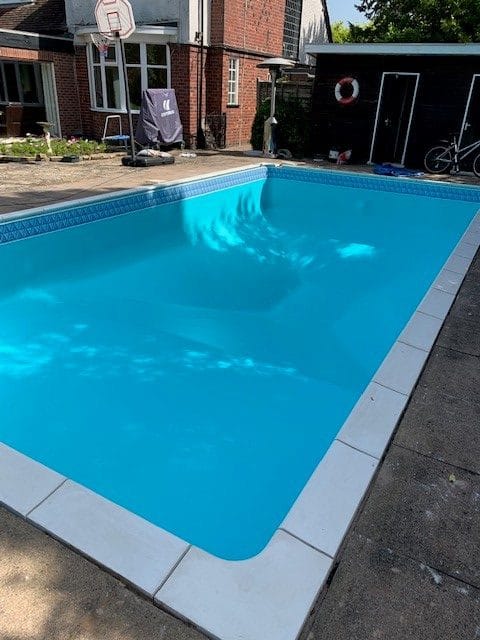
Pool coping is the border or cap that finishes the top edge of a swimming pool. It’s where the pool shell meets the surrounding deck or patio, and it serves a double purpose. Not only does coping create a clean, stylish edge for your pool, but it also adds a critical safety layer by giving swimmers a smooth, slip-resistant surface to hold onto. It defines the boundary, hides the bond beam, and helps protect the structure beneath from water damage. Whether you’re upgrading or designing a new pool, understanding what pool coping is helps you choose the right option for both function and appearance.
Why is Coping Important?
Pool coping plays a vital role in both the safety and structure of a swimming pool. First, it provides a smooth, slip resistant edge of the pool, making it safer for swimmers to grip or sit on. This is especially important for families with children or anyone who values peace of mind around water.
Coping also prevents water from getting behind the pool shell, which helps reduce long-term damage to the structure. By directing splash-out and rainwater into deck drains, it protects the bond beam and pool structure underneath. Just as importantly, coping sits between the pool and the deck, helping to blend the pool into the surrounding deck or patio and enhance the overall aesthetic.
Types of Pool Coping
There’s more than one type of pool coping, and each profile brings a different look and feel to your swimming pool edging. Choosing the right shape not only affects the overall aesthetic, but also impacts comfort, safety, and maintenance.
- Flat coping: This coping material sits flush with the pool and the deck, creating a clean, modern finish. It’s ideal for contemporary pool designs where simplicity and symmetry matter. Flat coping is especially useful for pools with automatic covers, as it allows for a smoother transition and reduces tripping hazards. Since it doesn’t protrude beyond the edge of the pool, it blends naturally into the surrounding deck or patio for a streamlined appearance.
- Bullnose coping: Featuring a rounded outer edge, bullnose coping softens the transition from the edge of the pool to the surrounding deck or patio. It’s comfortable to sit on and reduces sharp angles, making it a popular option for family pools. The rounded edge offers better handgrip support, which adds a layer of safety. This type of pool coping also complements curved or freeform pool shapes well, enhancing the fluidity of the design.
- Rebated coping: With a drop-down lip that extends over the pool wall, this type of pool coping creates a shadow-line effect. It helps conceal the edge of the pool shell and adds depth to the design, while also preventing water from staining the vertical face. Rebated profiles work especially well with tiled pools or those that need a more dramatic look. They provide a clean break between the waterline and the paving, highlighting the coping sits between the pool and the deck in a striking way.
Each style has its place depending on your garden setting and the types of pool you’re working with. Whether you want a bold contrast or a seamless flow, there’s a swimming pool coping profile to suit every taste.
Best Materials for Pool Coping
Choosing the right coping material makes a big difference in how your pool looks, feels, and lasts over time. Here are some of the best options available.
Stone
Natural stone coping is a premium choice that delivers timeless appeal. It’s highly durable, weather-resistant, and available in a range of textures and colours. Natural stone also holds up well to temperature changes, making it ideal for outdoor pools. While it comes at a higher price, its long-term performance and visual impact often make it worth the investment.
Concrete
Concrete coping offers versatility in shape and texture, making it a great match for custom pool designs. It can be poured or precast to suit various types of pool setups. Mid-range in cost, this coping material can be coloured or stamped for a bespoke finish. However, it does require sealing to prevent wear, especially in high-use areas or where water exposure is frequent.
Brick
Brick coping brings a warm, traditional look that pairs well with classic garden styles. It’s relatively easy to install and even easier to replace if damaged. Because it’s porous, brick can stain over time, especially when exposed to pool chemicals. Still, for those looking to match older homes or historic settings, it remains a solid and charming choice.
Porcelain
Porcelain is a sleek, modern option with low porosity, which means it resists water absorption and staining. It’s ideal for those seeking a clean, uniform finish and works well in both indoor and outdoor environments. Though its initial cost is on the higher side, porcelain coping needs less maintenance and holds its colour over time, contributing to a refined overall aesthetic.
Things to Consider When Choosing
When selecting the right swimming pool coping, it’s not just about looks, it’s also about how it performs for your specific needs.
Pool type (indoor/outdoor)
Different types of pool setups affect your coping choice. Outdoor pools face more weather extremes, so natural stone or sealed concrete may be better suited. Indoor pools, on the other hand, benefit from materials that tolerate constant moisture but don’t need to withstand harsh sun or freezing temperatures. Matching the coping material to your pool type helps preserve the finish and performance over time.
Garden style
Your garden’s aesthetic plays a major role in choosing the right coping. For traditional landscaping, brick or bullnose profiles may be more fitting. In modern settings, square edge designs with porcelain or flat coping provide a sleek finish. Since the coping sits between the pool and the deck, it should complement your overall design and flow naturally with the space around it.
Family use
If children or elderly family members will be using the pool, safety becomes a top priority. Opting for a slip resistant surface reduces the chance of accidents. Rounded profiles like bullnose are also more comfortable to sit or lean on, making them a practical choice for families. The edge of the pool should feel secure and soft underfoot without sacrificing durability.
Budget
Coping material prices vary widely. Concrete offers flexibility at a mid-range cost, while natural stone or porcelain tends to be more expensive upfront. Brick is often more affordable and easier to replace if damaged. Your budget will help narrow down options, but it’s worth balancing initial cost with long-term upkeep and visual appeal to get the most value.
Installation and Maintenance
Installing swimming pool coping is a precise job that requires skill and attention to detail.
First, the existing surface is prepped, ensuring the bond beam is clean, stable, and level. The coping material is then laid carefully along the edge of the pool, either mortared in place or set with adhesive, depending on the material type. Proper alignment is essential so that the coping sits flush and secure between the pool and the deck. Once in place, joints are sealed and expansion gaps are added to allow for movement caused by temperature changes.
If your design includes deck drains, these are also integrated to direct water away and protect the pool structure.
Maintenance is fairly simple but important. Regularly inspect the joins between coping units for signs of cracking or movement, especially after winter or heavy use. If you’ve chosen a material like concrete or natural stone, resealing may be necessary every few years to prevent water penetration and staining.
When cleaning, avoid high-pressure washers that could damage grout lines or loosen tiles. Instead, opt for gentle pressure washing or soft brushing with pool-safe cleaners. Keeping your coping clean and intact doesn’t just improve the look, it helps preserve the edge of the pool and maintain a seamless transition to the surrounding deck or patio.
Pool coping is more than just a finishing touch, it’s a key element that brings safety, structure, and style to any pool design. From protecting the bond beam to enhancing the overall aesthetic, the right swimming pool edging adds lasting value. Whether you’re building from scratch or updating an older layout, understanding what is pool coping helps you make better choices for your space, budget, and lifestyle.
To learn more or explore your options, visit Lovett Pools’ Pool Coping page. Our team is here to help you find the right solution for your pool and the deck it connects to. Get in touch today for expert advice.
